You don't need to speak Korean to travel in Korea, but a few short phrases make every day easier. Start with five: annyeonghaseyo (hello), gamsahamnida (thank you), igeo juseyo (this one, please), eolmayeyo? (how much is it?) and ___ eodiyeyo? (where is ___?). Below are about 40 phrases sorted by where you'll use them: the subway, taxis, restaurants, convenience stores, shops and emergencies. Each one has the Korean (Hangul), a romanized version and a note on when to say it. You can also just show the Hangul on your phone.
The romanization here follows the Revised Romanization of Korean, the official system from the National Institute of Korean Language. It's the same system used on road signs and subway maps, so the words will look familiar when you see them around you.
How to use this list
- Polite by default. Every phrase here ends in the polite -yo or -mnida form. That's right for staff, drivers and strangers of any age.
- Romanization is a guide, not exact sound. "eo" sounds like the "u" in "fun"; "eu" is like the "oo" in "good" with flat lips. Don't worry about being perfect: people will understand from context.
- Showing beats saying. For addresses and names, show the Korean text. Save this page or take screenshots before you go.
- Pair with a translator app. Papago (by Naver) handles longer sentences. Use these phrases for the quick stuff where opening an app is slower.
The 10 phrases you'll use every day
| English | Korean | Romanization | When to use it |
|---|---|---|---|
| Hello | 안녕하세요 | annyeonghaseyo | Any time of day, entering a shop |
| Thank you | 감사합니다 | gamsahamnida | Everywhere; the safest "thanks" |
| Thanks (softer) | 고마워요 | gomawoyo | Friendly, still polite |
| Yes / No | 네 / 아니요 | ne / aniyo | "Ne" also means "I see / OK" |
| Excuse me (to get attention) | 저기요 | jeogiyo | Calling staff, asking a stranger |
| Sorry | 죄송합니다 | joesonghamnida | Bumping into someone, being late |
| It's OK / No thanks | 괜찮아요 | gwaenchanayo | Declining a bag, a receipt, an offer |
| This one, please | 이거 주세요 | igeo juseyo | Point at a menu or item |
| How much is it? | 얼마예요? | eolmayeyo? | Markets, street food, shops |
| Where is ___? | ___ 어디예요? | ___ eodiyeyo? | Add a place: hwajangsil (toilet) eodiyeyo? |
One trick to remember: almost anything + juseyo (주세요, "please give me") works. Mul juseyo = water, please. Hana juseyo = one, please. Yeongsujeung juseyo = a receipt, please.
On the subway and bus
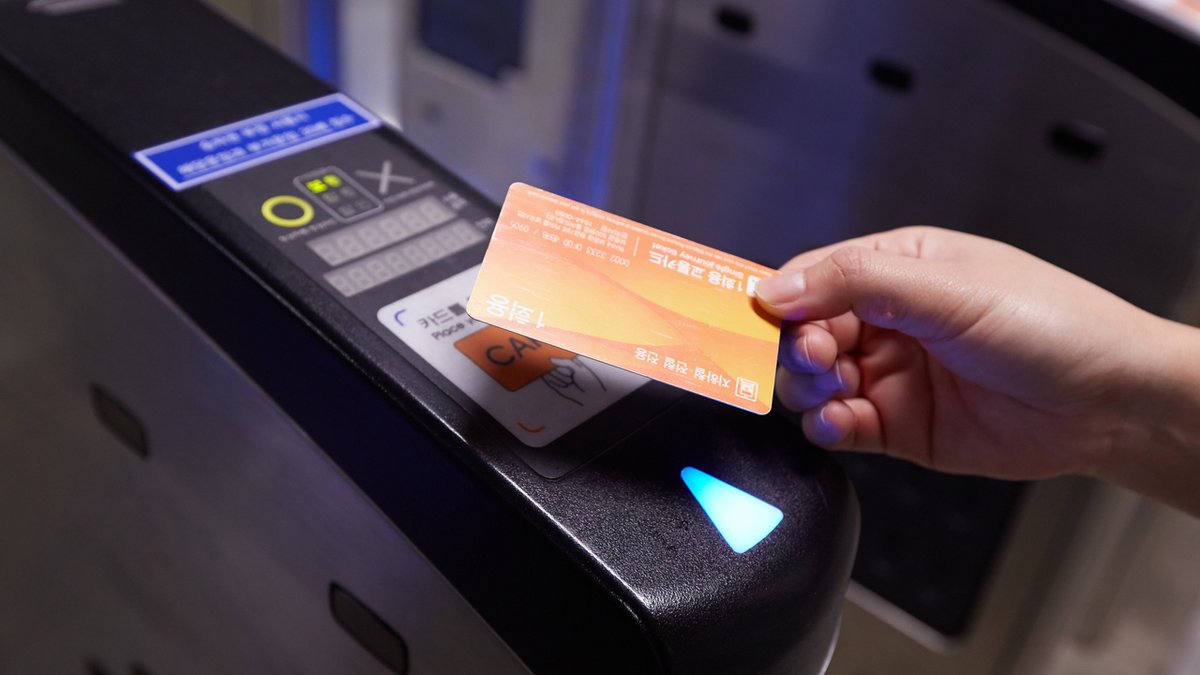
Stations have signs and announcements in English, so you'll rarely need to speak. These help when you're lost or your card doesn't work.
| English | Korean | Romanization |
|---|---|---|
| Where is ___ Station? | ___역 어디예요? | ___-yeok eodiyeyo? |
| Which exit? | 몇 번 출구예요? | myeot beon churguyeyo? |
| Exit number 3 | 3번 출구 | sam-beon chulgu |
| Does this go to ___? | 이거 ___ 가요? | igeo ___ gayo? |
| Where do I transfer? | 어디서 갈아타요? | eodiseo garatayo? |
| My card doesn't work | 카드가 안 돼요 | kadeuga an dwaeyo |
| I want to top up | 충전해 주세요 | chungjeonhae juseyo |
Station names end in -yeok (역), so Myeongdong Station is Myeongdong-yeok. Exits are numbered: sam-beon chulgu is Exit 3. Korean uses two number systems; for exits, lines and money you use the Sino-Korean one: il, i, sam, sa, o, yuk, chil, pal, gu, sip (1 to 10). For how fares and transfers work, see our Seoul subway guide and T-money card guide.
In a taxi
Many drivers speak little English, and Korean place names are easy to mispronounce. Show the destination in Korean (from your hotel booking, Naver Map or the place's website), then use these:
| English | Korean | Romanization |
|---|---|---|
| Please go here (while showing your phone) | 여기로 가 주세요 | yeogiro ga juseyo |
| Please stop here | 여기서 세워 주세요 | yeogiseo sewo juseyo |
| Please open the trunk | 트렁크 열어 주세요 | teureongkeu yeoreo juseyo |
| Can I pay by card? | 카드 돼요? | kadeu dwaeyo? |
| How long does it take? | 얼마나 걸려요? | eolmana geollyeoyo? |
| Receipt, please | 영수증 주세요 | yeongsujeung juseyo |
Fares, late-night surcharges and the airport flat fares are in our Korea taxi guide.
At a restaurant
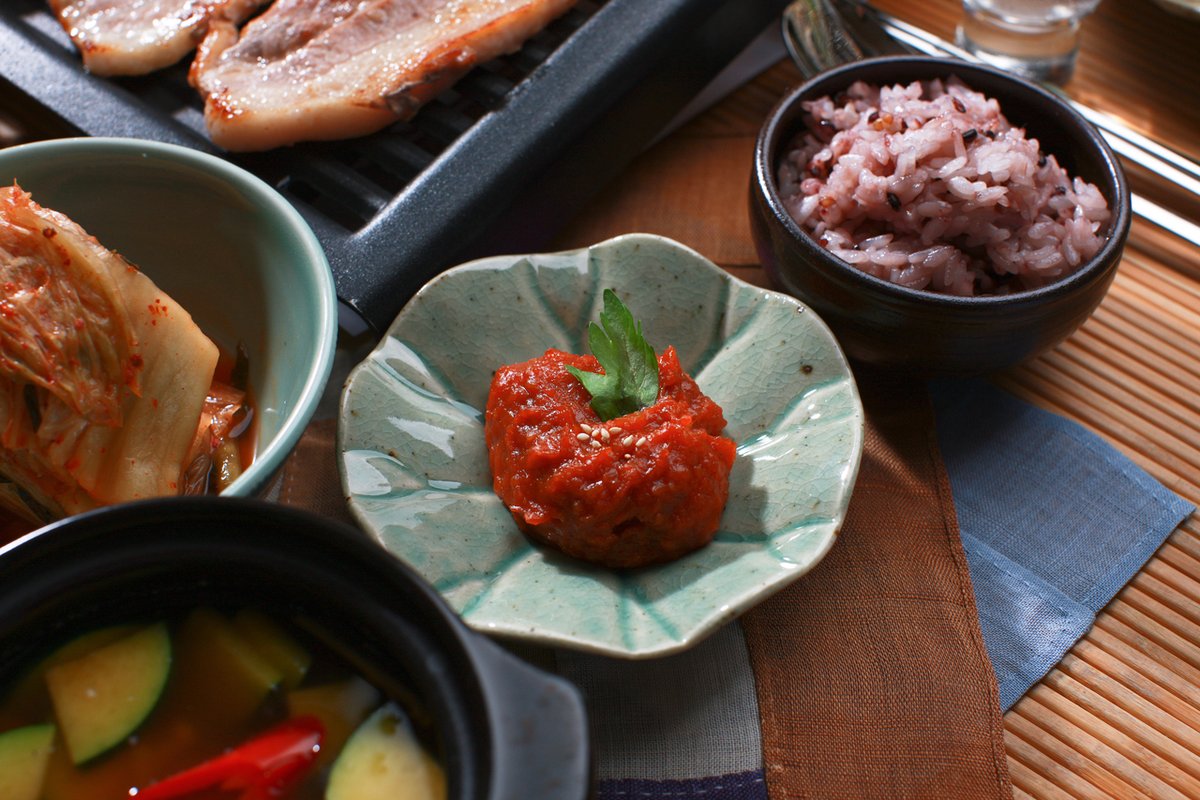
In many Korean restaurants you call staff to your table instead of waiting for them to come by. Saying jeogiyo! (or yeogiyo!, "over here!") clearly is normal, not rude. Some tables have a call button instead.
| English | Korean | Romanization |
|---|---|---|
| Table for two, please | 두 명이요 | du myeong-iyo |
| Menu, please | 메뉴판 주세요 | menyupan juseyo |
| Do you have an English menu? | 영어 메뉴 있어요? | yeong-eo menyu isseoyo? |
| What do you recommend? | 뭐가 맛있어요? | mwoga masisseoyo? |
| Not spicy, please | 안 맵게 해 주세요 | an maepge hae juseyo |
| Is it spicy? | 매워요? | maewoyo? |
| More side dishes, please | 반찬 더 주세요 | banchan deo juseyo |
| Water, please | 물 주세요 | mul juseyo |
| I'm allergic to ___ | ___ 알레르기 있어요 | ___ allereugi isseoyo |
| The bill, please | 계산할게요 | gyesanhalgeyo |
| It was delicious | 잘 먹었습니다 | jal meogeotseumnida |
For counting people you use the native Korean numbers: han (1), du (2), se (3), ne (4) + myeong (people). So "three people" is se myeong-iyo.
Two common surprises: water and side dishes (banchan) are usually free, and in many casual places water is self-service from a cooler or a jug at the table. Many places also expect you to pay at the counter on the way out rather than at the table. Say gyesanhalgeyo and walk to the register. If you have a serious food allergy, also show it written in Korean; a spoken phrase is easy to mishear in a busy room. Our Korean BBQ guide explains how ordering works at a grill restaurant.
At the convenience store
Staff usually ask you short questions at the counter. Knowing what they mean is more useful than speaking:
| What you'll hear | Korean | Romanization | What to answer |
|---|---|---|---|
| Do you need a bag? | 봉투 필요하세요? | bongtu pillyohaseyo? | Ne (yes) or gwaenchanayo (no thanks) |
| Shall I heat it up? | 데워 드릴까요? | dewo deurilkkayo? | Ne, dewo juseyo (yes, please heat it) |
| Do you want the receipt? | 영수증 드릴까요? | yeongsujeung deurilkkayo? | Ne or gwaenchanayo |
| Card or cash? | 카드세요, 현금이세요? | kadeuseyo, hyeongeumiseyo? | Kadeu or hyeongeum |
And a few to say yourself: jeotgarak juseyo (chopsticks, please: 젓가락 주세요), hwajangsil isseoyo? (is there a toilet? 화장실 있어요?), T-money chungjeonhae juseyo (top up my T-money, please). See Korean convenience store food for what to buy.
Shopping and markets
| English | Korean | Romanization |
|---|---|---|
| How much is this? | 이거 얼마예요? | igeo eolmayeyo? |
| Just looking | 그냥 볼게요 | geunyang bolgeyo |
| Can I try it on? | 입어 봐도 돼요? | ibeo bwado dwaeyo? |
| Do you have a bigger / smaller one? | 더 큰 거 / 작은 거 있어요? | deo keun geo / jageun geo isseoyo? |
| Can I get a tax refund? | 택스 리펀드 돼요? | taekseu ripeondeu dwaeyo? |
| A little cheaper, please? | 좀 깎아 주세요 | jom kkakka juseyo |
Haggling is not normal in department stores, chain shops or convenience stores. In some traditional markets you may hear jom kkakka juseyo, but treat it as a friendly ask, not a negotiation. Tax refund rules and minimum amounts are in our Korea tax refund guide.
Help and emergencies
| English | Korean | Romanization |
|---|---|---|
| Help! | 도와주세요! | dowajuseyo! |
| I'm lost | 길을 잃었어요 | gireul ireosseoyo |
| Please call the police | 경찰 불러 주세요 | gyeongchal bulleo juseyo |
| Please call an ambulance | 구급차 불러 주세요 | gugeupcha bulleo juseyo |
| I'm sick / It hurts here | 아파요 / 여기가 아파요 | apayo / yeogiga apayo |
| Where is a pharmacy? | 약국 어디예요? | yakguk eodiyeyo? |
| Do you speak English? | 영어 하세요? | yeong-eo haseyo? |
| I don't understand | 잘 모르겠어요 | jal moreugesseoyo |
| Slowly, please | 천천히 말해 주세요 | cheoncheonhi malhae juseyo |
The numbers to know (VisitKorea, updated 11 September 2026):
| Number | What it's for |
|---|---|
| 112 | Police |
| 119 | Fire and medical emergencies (ambulance) |
| 1330 (from a mobile: +82-2-1330) | Korea Travel Hotline: travel help and interpretation in Korean, English, Japanese, Chinese, Russian, Vietnamese, Thai and Malay |
VisitKorea also says the 112 and 119 services can connect you to an interpreter. If you can't explain where you are, read out the nearest sign or show your map. See what to do if you're sick or injured in Korea and our 1330 hotline guide.
Common mistakes
- Reading romanization like English. Gamsahamnida is said "gam-sa-ham-ni-da", not "gam-SAH-ham-NEE-dah" with heavy stress. Korean is fairly flat; keep every syllable short and even.
- Using casual Korean you heard in dramas. Gomawo or annyeong without -yo is for friends. With staff, always keep the -yo.
- Saying addresses out loud. Show them. It's faster and avoids going to the wrong neighborhood with a similar name.
- Waiting for the bill to come. At many casual restaurants you pay at the counter by the door.
- Mixing the two number systems. Native numbers (han, du, se) for people and items; Sino-Korean (il, i, sam) for money, exits and line numbers. If in doubt, hold up fingers.
FAQ
Do I need to learn Hangul before visiting Korea?
No. Signs in subways, airports and major sights have English. Learning to read Hangul takes a few hours and helps with menus, but it isn't needed.
What's the most useful Korean word for travelers?
Juseyo (주세요), "please give me". Point at something and say igeo juseyo (this one, please), and you can order food, buy tickets and shop.
Is it rude to call "jeogiyo" in a restaurant?
No. It's the normal way to get a server's attention in Korea. Say it clearly once, not repeatedly.
Why do I see different spellings like "kamsahamnida" and "gamsahamnida"?
They come from different romanization systems. The official Revised Romanization, which this guide and road signs use, writes gamsahamnida. Older systems wrote kamsahamnida. Both mean the same thing.
Final word
Learn the five everyday phrases, keep juseyo in your pocket, and show addresses in Korean instead of saying them. Save the emergency numbers 112, 119 and 1330 before you land. People in Korea are used to visitors, and a simple gamsahamnida goes a long way.