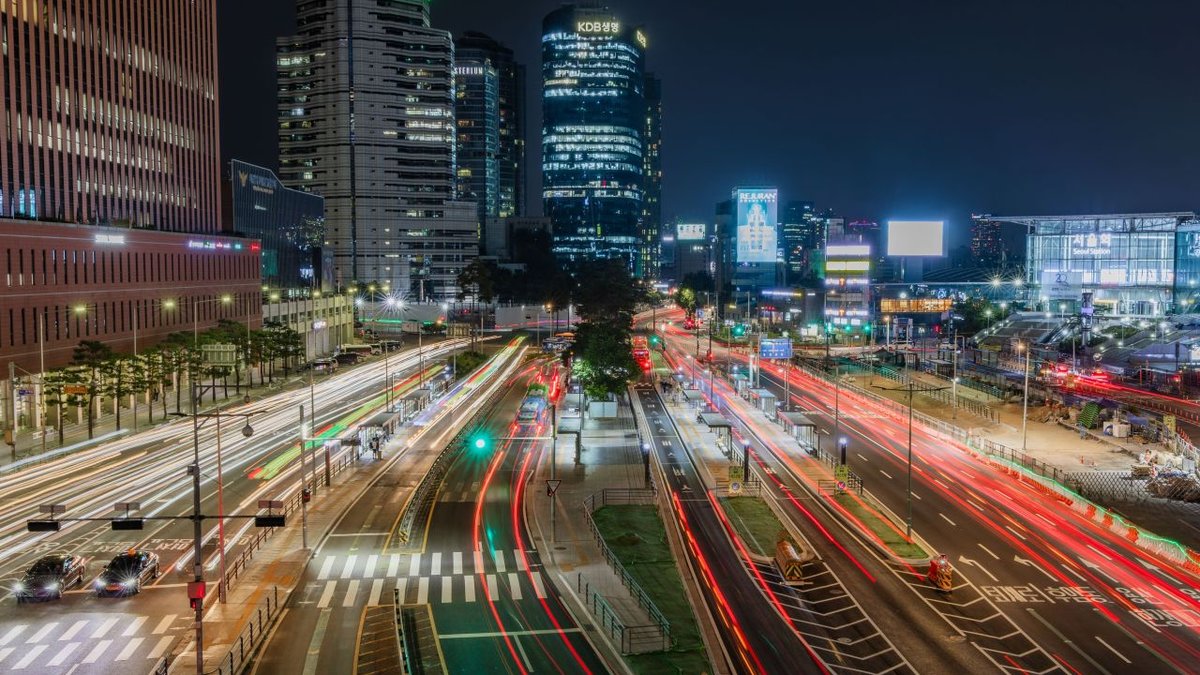
A regular taxi in Seoul starts at 4,800 won for the first 1.6 km, then adds 100 won for every 131 m (or every 30 seconds when the car is crawling in traffic). That's the official Seoul City fare, unchanged since February 2023 and still listed as of November 2026. Late at night the meter runs 20% or 40% higher, and black "deluxe" taxis start at 7,000 won. Below: what each kind of taxi costs, worked examples, how the airport flat fares work, how to pay, and the mistakes that cost visitors money.
Seoul taxi fares at a glance
These are Seoul City's official meter fares (as of November 2026). Other cities set their own fares, so the numbers differ outside Seoul.
| Taxi type | Base fare | Then | Late-night surcharge |
|---|---|---|---|
| Mid-size (regular, usually orange, white, silver) | 4,800 won for 1.6 km | 100 won per 131 m or per 30 sec | +20% (10-11 pm, 2-4 am), +40% (11 pm-2 am) |
| Deluxe (mobeom, black) and large sedan | 7,000 won for 3 km | 200 won per 151 m or per 36 sec | +20% (10 pm-4 am) |
| International Taxi (for visitors) | Same meter as above | Up to +20% foreign-passenger surcharge | Same as above |
Other rules from the same Seoul City page: - Leaving Seoul (for example to a city in Gyeonggi Province) adds a 20% out-of-city surcharge. For trips to and from Incheon Airport, this surcharge does not apply within Seoul, Gwangmyeong, Bucheon, Gimpo, Goyang and Incheon. - Surcharges stack, but a mid-size taxi can add no more than 60% in total. Deluxe and large taxis are capped at 40%. - Tolls are paid by the passenger, at cost, when the driver uses a toll road at your request. - The driver must charge the meter fare only. A driver who names a fixed price for a meter taxi is breaking Seoul's rules.
What a ride actually costs (worked examples)
The meter adds 100 won every 131 m after the first 1.6 km. These examples use distance only. In slow traffic (under about 16 km/h), time is charged too, so real fares run a bit higher.
| Trip | Daytime (mid-size) | 11 pm-2 am (+40%) |
|---|---|---|
| 1.5 km (one or two subway stops) | 4,800 won | 6,700 won |
| 5 km (e.g. across central Seoul) | about 7,400 won | about 10,300 won |
| 10 km (e.g. Hongdae to Gangnam area) | about 11,200 won | about 15,700 won |
How the 5 km daytime fare works: 4,800 won covers 1.6 km. The other 3.4 km is about 26 steps of 131 m, so 26 × 100 = 2,600 won. Total: about 7,400 won.
Four friends sharing a 10 km daytime ride pay about 2,800 won each, which is close to a subway fare. For one person, the subway is far cheaper: 1,550 won with a card (see our T-money guide).
Late-night surcharge: the hours that matter
Since December 2022, Seoul's night surcharge starts at 10 pm, not midnight. For regular taxis it works like this (Seoul City, as of November 2026):
| Time | Surcharge | Base fare | Per 131 m |
|---|---|---|---|
| 4 am - 10 pm | none | 4,800 won | 100 won |
| 10 pm - 11 pm | +20% | 5,800 won | 120 won |
| 11 pm - 2 am | +40% | 6,700 won | 140 won |
| 2 am - 4 am | +20% | 5,800 won | 120 won |
Tip: if you're out at a show or in Hongdae, leaving at 10:50 pm instead of 11:10 pm can save 20% on the same trip. The subway usually runs until around midnight, but last trains vary by line and station, so check Naver Map or KakaoMap (see our map app guide).
Airport taxis: Incheon flat fares and Gimpo estimates
Incheon Airport. Regular taxis use the meter (plus the expressway toll). If you want a fixed price, Seoul's International Taxi has official zone fares between Incheon Airport and Seoul, tolls included (Seoul City, as of November 2026):
| Zone (Seoul districts) | Mid-size | Deluxe / large |
|---|---|---|
| A: Gangseo | 70,000 won | 100,000 won |
| B: Yangcheon, Guro, Yeongdeungpo, Mapo (Hongdae), Eunpyeong, Seodaemun | 75,000 won | 110,000 won |
| C: Geumcheon, Gwanak, Dongjak, Yongsan, Jung (Myeong-dong), Jongno | 85,000 won | 120,000 won |
| D: Seocho, Gangnam, Seongdong, Dongdaemun, Seongbuk, Gangbuk | 90,000 won | 130,000 won |
| E: Songpa (Jamsil), Gangdong, Gwangjin, Jungnang, Nowon, Dobong | 95,000 won | 140,000 won |
For one or two people, the AREX train is much cheaper: see Incheon Airport to Seoul. A flat-fare taxi makes more sense for a family with lots of luggage, a late arrival, or a group splitting the cost.
Gimpo Airport. Gimpo is close to the city. The airport's own estimates for a regular taxi without traffic are about 15,000 won to Hongdae and 20,000 won to Myeong-dong. Details are in our Gimpo Airport to Seoul guide.
International Taxi: drivers who speak your language
International Taxi is a Seoul City designated service with drivers who speak English, Chinese or Japanese, according to its official site. You book online with your pickup, destination and time, and you get a confirmation email with the car and driver details.
- Within Seoul: meter fare, with up to a 20% foreign-passenger surcharge allowed (Seoul City).
- Airport: the zone fares in the table above.
- Charter by time (tolls extra): 70,000 won for 3 hours, 110,000 won for 5 hours, 160,000 won for 8 hours, 240,000 won for a full day in a mid-size car.
- Payment: cash or credit card (Visa, Amex, Mastercard and others), per the official site.
Who should use it: first-timers who are nervous about explaining an address, travelers with mobility needs, and anyone who wants a booked airport pickup. For short hops around town, a regular taxi is cheaper.
How to get a taxi and pay
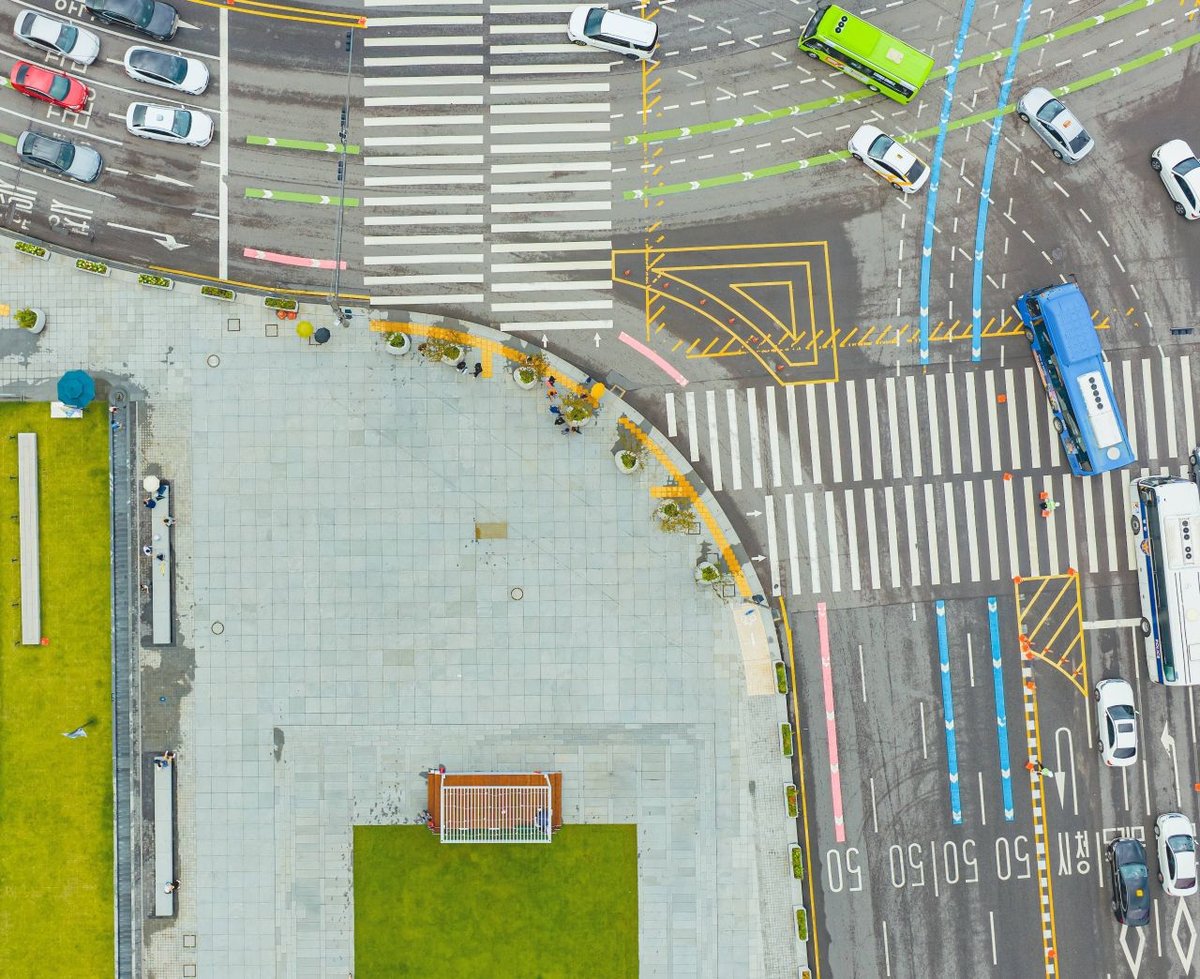
Hailing on the street. A lit sign on the roof (or a red "빈차" sign in the windshield) means the taxi is free. Many hotels, stations and department stores have a taxi stand with a queue.
Using an app. Kakao T is Korea's main taxi app, and Kakao Mobility also runs k.ride, an app made for foreign visitors. Sign-up rules, which taxis you can call, and fees can change, so check the app's own information before you rely on it. Premium app taxis set their own fares: Seoul City lists Kakao T Black at 6,000 won to start, with dynamic pricing from 0.7 to 4 times the normal fare.
Showing the address. Most drivers use the car's navigation. Show the place name in Korean or the address from Naver Map, or say the name of a nearby subway station.
Paying. - Cards: most taxis have a card reader by the front seat. - T-money: Tmoney says its Travel card works in taxis. Check for the reader and ask "T-money, OK?" before you set off. - Cash: carry some won for older taxis or a dead card reader. - Ask for a receipt ("yeongsujeung juseyo") if you might need to report a lost item or a problem.
Common mistakes
- Agreeing to a fixed price for a regular taxi. Seoul rules say the meter fare only. If a driver won't use the meter, take another taxi.
- Forgetting the out-of-city surcharge. A trip from Seoul to a city outside it adds 20% (with the Incheon Airport exception above).
- Taking a black taxi by mistake. A black deluxe taxi starts at 7,000 won, about 46% more than a regular taxi. If you want the cheaper one, wait for a regular taxi.
- Leaving at 11:05 pm. The 40% surcharge runs 11 pm to 2 am. A few minutes earlier is 20%.
- Taking a taxi for one person at rush hour. Seoul traffic is slow at peak times, and the time charge adds up. The subway is often faster.
FAQ
How much is the taxi base fare in Seoul?
4,800 won for the first 1.6 km in a regular (mid-size) taxi, as listed by Seoul City (as of November 2026). It is 5,800 won with the 20% night surcharge and 6,700 won with the 40% surcharge.
Do I need to tip taxi drivers in Korea?
Tipping is not expected in Korea. Pay the meter fare.
Can I pay a taxi with a foreign credit card?
Most taxis have card readers, and the International Taxi site says it takes Visa, Amex and Mastercard. A reader can fail with some foreign cards, so carry a little cash or a loaded T-money card as backup.
Is there a cheaper fixed fare from Incheon Airport?
International Taxi's official zone fares are 70,000 to 95,000 won for a mid-size car, tolls included, depending on the Seoul district. The AREX train costs far less for one or two people.
Who can I call if there's a problem with a taxi?
The 1330 Korea Travel Hotline helps visitors in English and other languages, 24 hours a day. See our 1330 guide.
Final word
Seoul taxis are reasonably priced: 4,800 won to start, about 7,400 won for 5 km and about 11,200 won for 10 km in the daytime. Watch the clock at night (+40% from 11 pm to 2 am), skip the black deluxe taxis unless you want them, and always use the meter. From Incheon Airport with lots of luggage, International Taxi's 70,000-95,000 won flat fares remove the guesswork. Planning more of your first days? Start with our Incheon Airport tips.