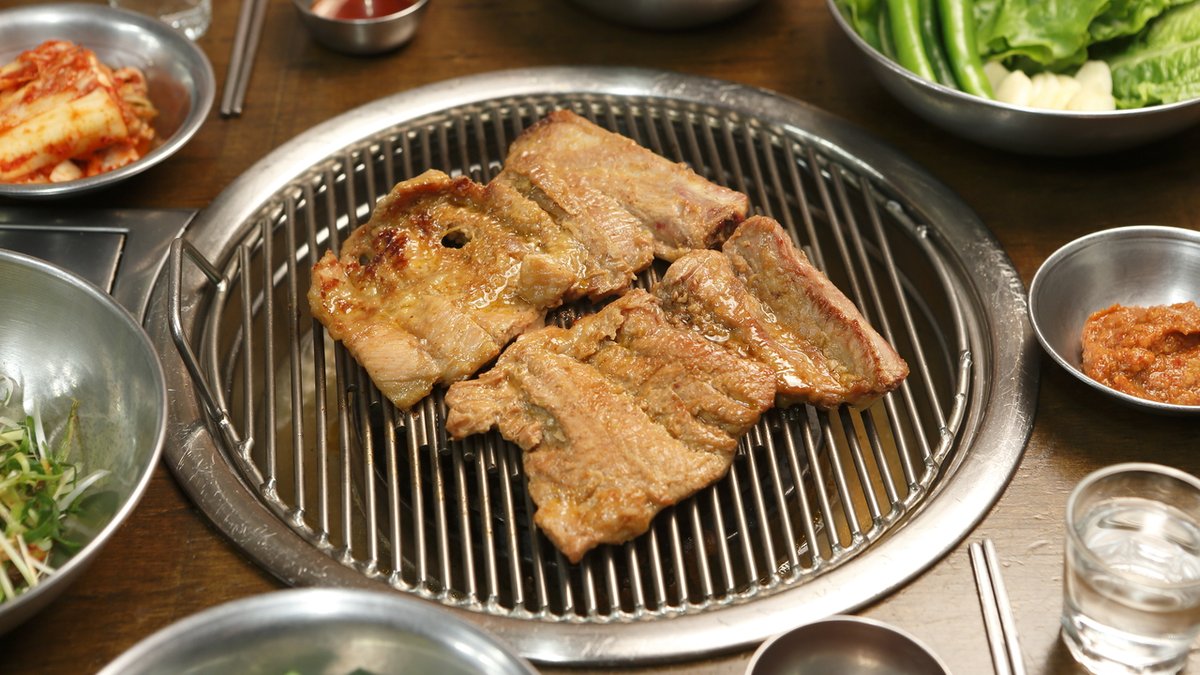
Korean BBQ (gogi-gui, 고기구이) is meat you grill at your own table and eat wrapped in lettuce with sauce and side dishes. In Seoul, one serving of samgyeopsal (pork belly) averaged 18,154 won in September 2026, according to the Korea Consumer Agency's price portal, and most grill restaurants expect you to order two or more servings. If this is your first time, order samgyeopsal for two, add rice or cold noodles at the end, and use the step-by-step guide below.
What to expect at a Korean BBQ restaurant
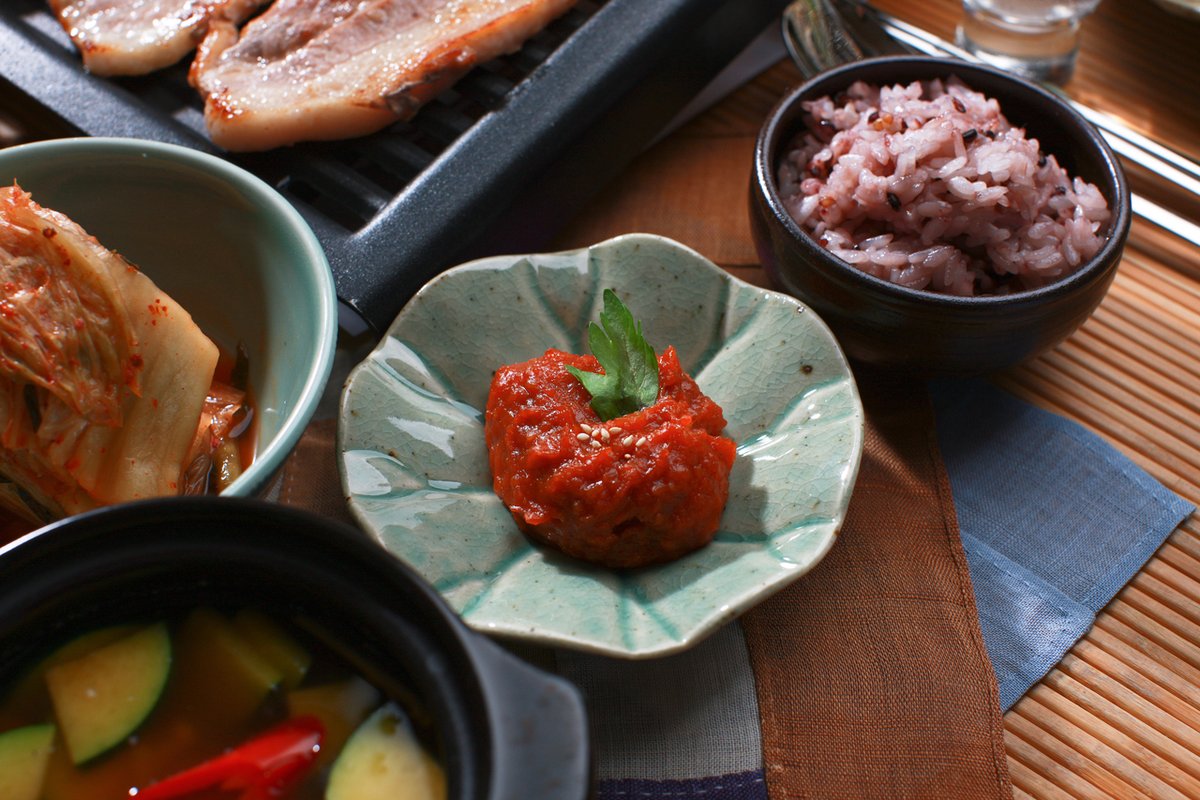
A Korean BBQ meal follows the same pattern almost everywhere:
- You sit at a table with a grill in the middle. Some grills use charcoal, others gas or an electric plate.
- You order meat by the serving (인분, inbun). The menu lists a price per serving, and the weight per serving is often written next to it.
- Side dishes arrive for free. Expect lettuce and other leaves, kimchi, sliced garlic and green chili, ssamjang (a thick dipping paste), and a few small banchan. These come with the meat. You don't order them.
- The meat is grilled at the table. At some places, staff grill and cut it for you. At others, you do it yourself with tongs and scissors.
- You finish with a "second course". Many people order rice, soybean paste stew or cold noodles after the meat.
Most grill restaurants are made for groups. Eating alone is possible at some places, but many menus say meat must be ordered for two or more. Look for a note like "2인분 이상 주문 가능" ("2 servings or more").
10 Korean BBQ cuts explained
These are the names you'll see on menus. The English names below are the official translations from the Korean Food Promotion Institute's menu-name guide, so you can match them to English menus.
| Korean (romanized) | Official English name | Meat | What it's like |
|---|---|---|---|
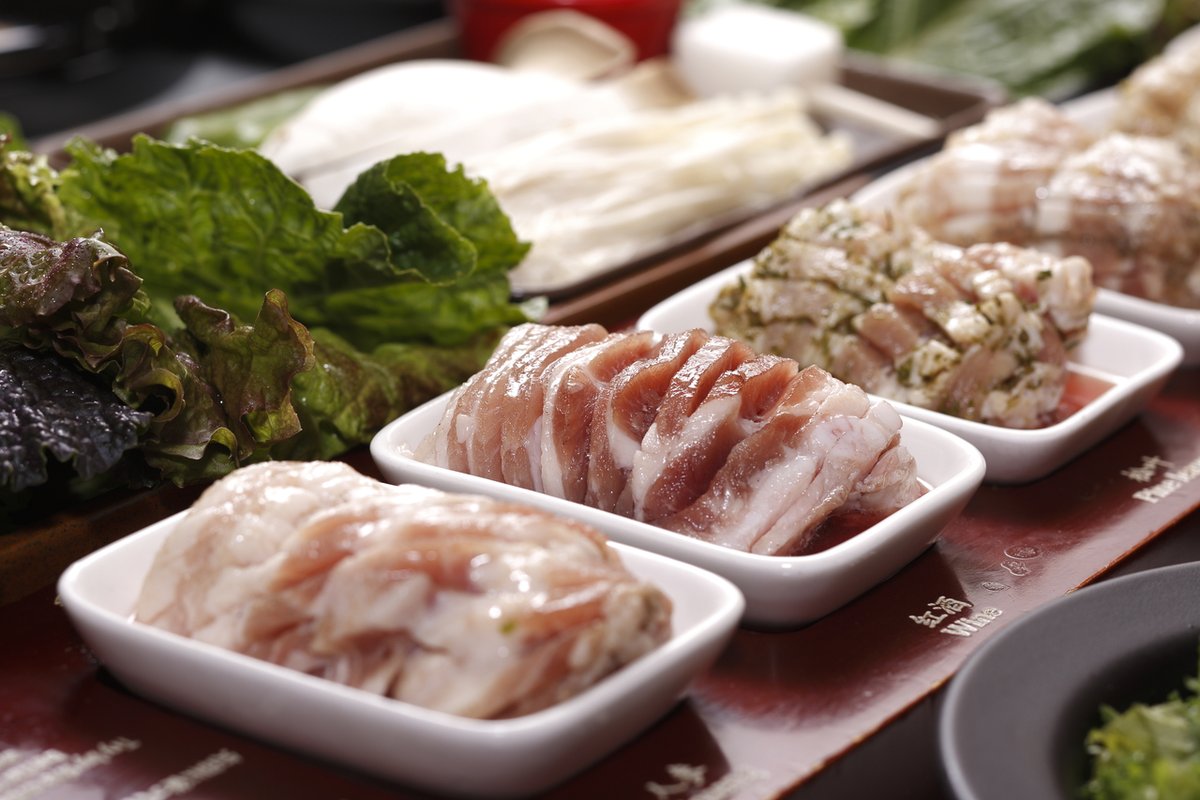
| 삼겹살 Samgyeopsal | Grilled Pork Belly | Pork | Thick, fatty strips with layers of fat and meat. The classic first order. |
| 목살 Moksal | Grilled Pork Neck | Pork | Less fatty than belly, still juicy. Good if belly feels too rich. |
| 대패삼겹살 Daepae-samgyeopsal | Grilled Thin-sliced Pork Belly | Pork | Paper-thin belly that cooks in seconds. Usually cheaper. |
| 고추장삼겹살 Gochujang-samgyeopsal | Red Chili Paste Pork Belly | Pork | Pork belly in a spicy red pepper sauce. |
| 돼지갈비 Dwaeji-galbi | Grilled Spareribs | Pork | Pork ribs, usually marinated in a sweet soy sauce. Burns easily, so turn it often. |
| 양념갈비 Yangnyeom-galbi | Marinated Grilled Beef Ribs / Pork Ribs | Beef or pork | "Yangnyeom" means marinated. Check the menu to see if it's beef (소) or pork (돼지). |
| 소갈비 So-galbi | Grilled Beef Ribs | Beef | Beef short ribs, plain or marinated. One of the more expensive orders. |
| 차돌박이 Chadolbagi | Grilled Beef Brisket | Beef | Very thin slices of brisket. Takes a few seconds on the grill. |
| 등심 Deungsim | Grilled Sirloin | Beef | Thick beef steak cuts. Often the priciest item on the menu. |
| 곱창 Gopchang | Grilled Beef Tripe / Pork Tripe | Beef or pork | Small intestine, chewy and rich. Popular with locals, but not for everyone. |
Pork or beef? On a menu, 돼지 (dwaeji) means pork and 소 (so) means beef. 한우 (hanwoo) means Korean native beef, which usually costs more than imported beef.
How much does Korean BBQ cost in Seoul?
The Korea Consumer Agency publishes average restaurant prices by region every month, using data from the Ministry of the Interior and Safety. These are the September 2026 figures (provisional), the latest available on 8 November 2026.
| Item (Seoul average) | Price | Unit |
|---|---|---|
| Samgyeopsal, as listed on menus | 18,154 won | 1 serving (about 100-250 g) |
| Samgyeopsal, converted to 200 g | 21,321 won | 200 g |
| Naengmyeon (cold noodles) | 12,692 won | 1 bowl |
| Kimchi stew set meal (kimchi-jjigae baekban) | 8,846 won | 1 serving |
| Bibimbap | 12,000 won | 1 bowl |
Why two samgyeopsal numbers? Restaurants serve anywhere from about 100 g to 250 g as "one serving". The survey also converts every price to 200 g so they can be compared. When you read a menu, check the grams. A cheaper serving may simply be smaller.
Samgyeopsal is cheaper outside Seoul in the same survey: Busan 11,500 won per serving (18,175 won per 200 g) and Gyeonggi 16,897 won (18,166 won per 200 g). The agency notes that the surveyed shops differ from region to region, so treat these as rough guides.
Worked example: dinner for two in Seoul
| Order | Price (Seoul average) |
|---|---|
| Samgyeopsal x 3 servings | 54,462 won |
| Mul-naengmyeon (cold noodles) x 2 | 25,384 won |
| Total before drinks | 79,846 won (about 40,000 won each) |
Drinks, rice and extra dishes are added on top. Prices for soju, beer and soft drinks aren't in the survey, so check the menu. Beef ribs or sirloin will cost several times more than pork belly per serving.
How to order, step by step
- Get a table. Say the number of people with your fingers. Many places have a waiting list at the door on weekend evenings.
- Find the meat section of the menu. Look for 인분 (serving) and the gram number next to each price.
- Order the meat. Point and say "samgyeopsal i-inbun juseyo" ("pork belly for two, please"). For three servings, say sam-inbun.
- Call staff when you need something. Say "yeogiyo!" ("excuse me, over here"). Many tables also have a call button.
- Ask for more side dishes. At many places, lettuce and banchan refills are free. Say "sangchu deo juseyo" (more lettuce, please). Some restaurants have a self-service bar for refills instead.
- Order the second course. "Gongi-bap juseyo" (a bowl of rice), "doenjang-jjigae" (soybean paste stew) or "mul-naengmyeon" (cold noodles).
- Pay at the counter on your way out. In most restaurants you don't pay at the table. Tell them your table number or bring the bill if they gave you one.
How to grill the meat
- Wait until the grill is hot. Put the meat on only when you hear it sizzle.
- Pork belly: grill one side until it turns golden, flip it once, then cut it into bite-size pieces with the scissors. Pork must be cooked through, so make sure no pink is left.
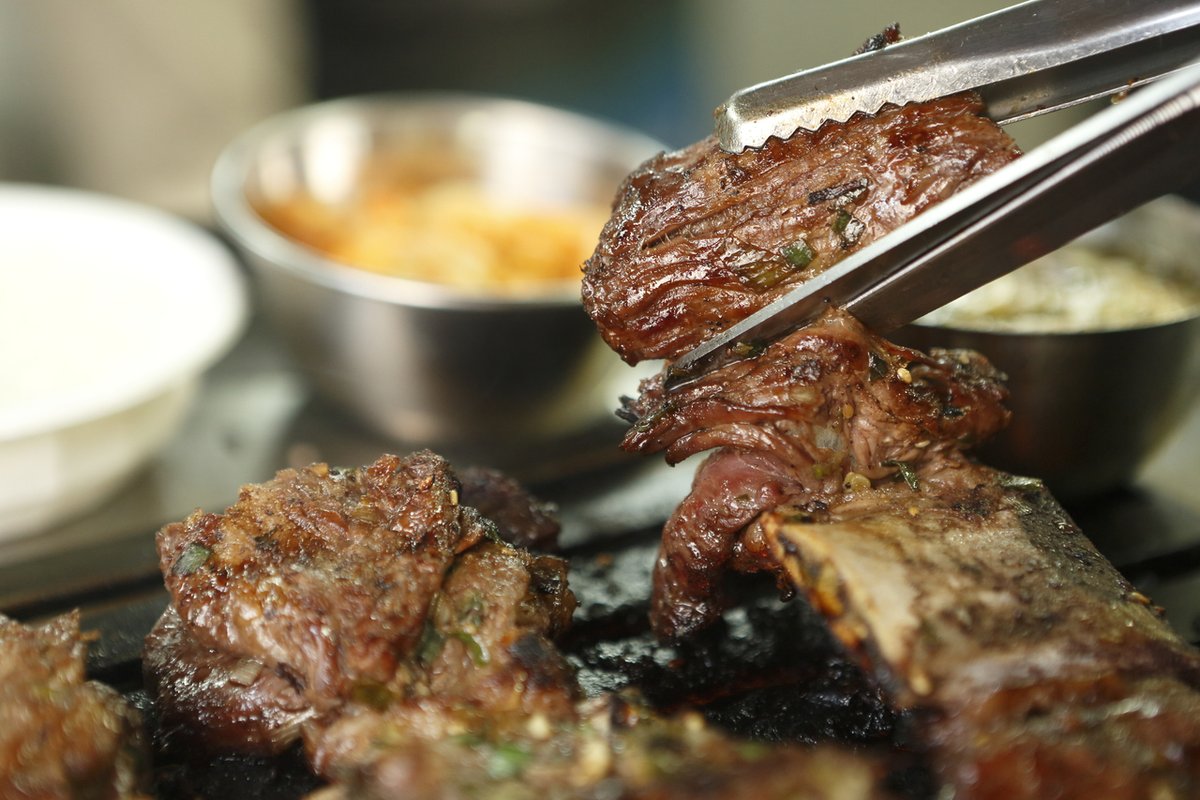
- Marinated meat (galbi): the sugar in the sauce burns fast. Turn it often and move pieces to the edge of the grill once they're done.
- Thin cuts (chadolbagi, daepae-samgyeopsal): a few seconds per side is enough.
- Kimchi and garlic: many people put kimchi and sliced garlic on the grill next to the pork. It's normal, not rude.
- Ask staff to change the grill plate if it gets black and sticky: "bulpan bakkwo juseyo" ("please change the grill plate").
How to eat ssam (the lettuce wrap)
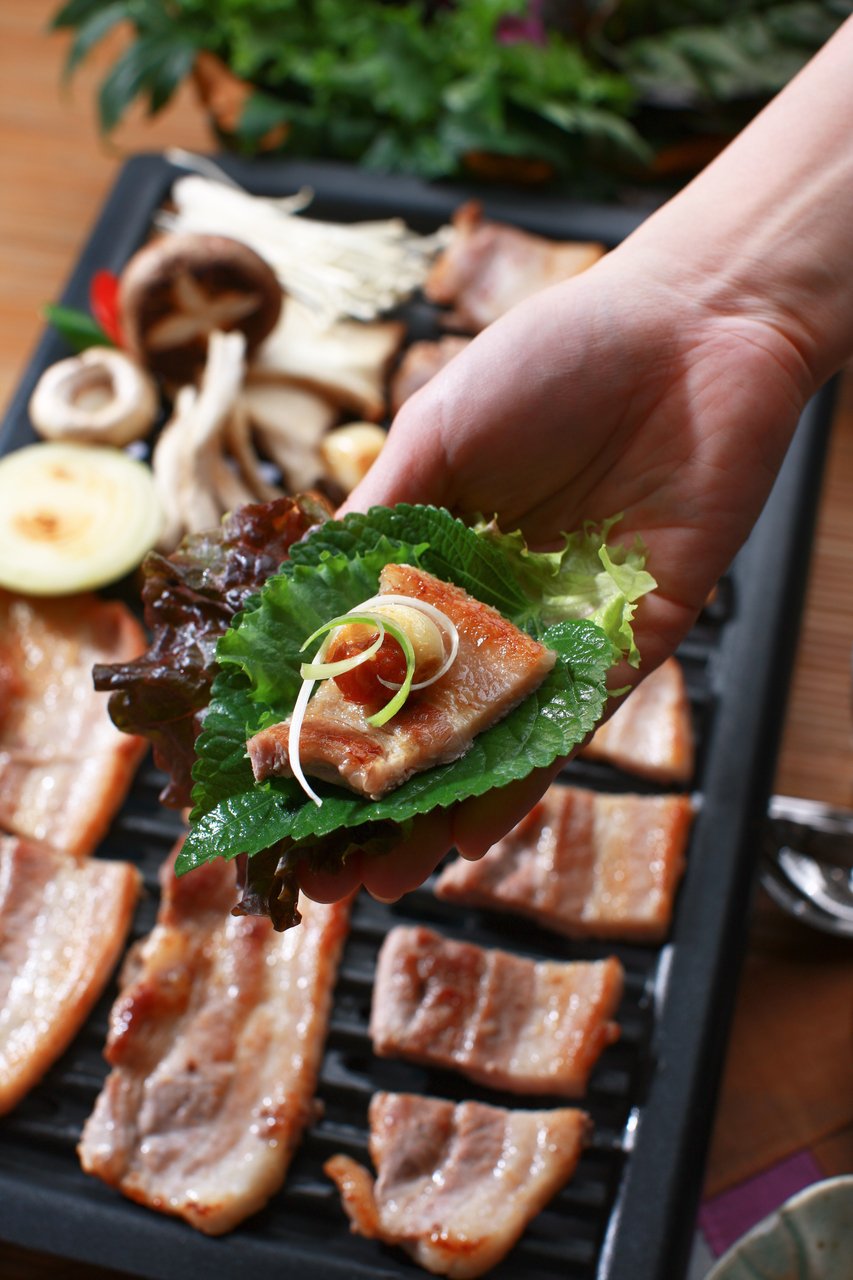
Ssam means "wrap". It's the most common way to eat Korean BBQ:
- Put a lettuce leaf (or perilla leaf) in your open hand.
- Add a piece of grilled meat.
- Add a little ssamjang. Its official English name is "Red Chili and Soybean Paste". It's salty, a little sweet and only mildly spicy.
- Add extras if you like: grilled garlic, green chili, kimchi, green onion salad (pa-muchim) or a spoon of rice.
- Fold it closed and eat it in one bite. Make it small enough to fit.
You don't have to wrap every piece. Dipping the meat in sesame oil with salt, or just in ssamjang, is common too.
Side dishes and the "second course"
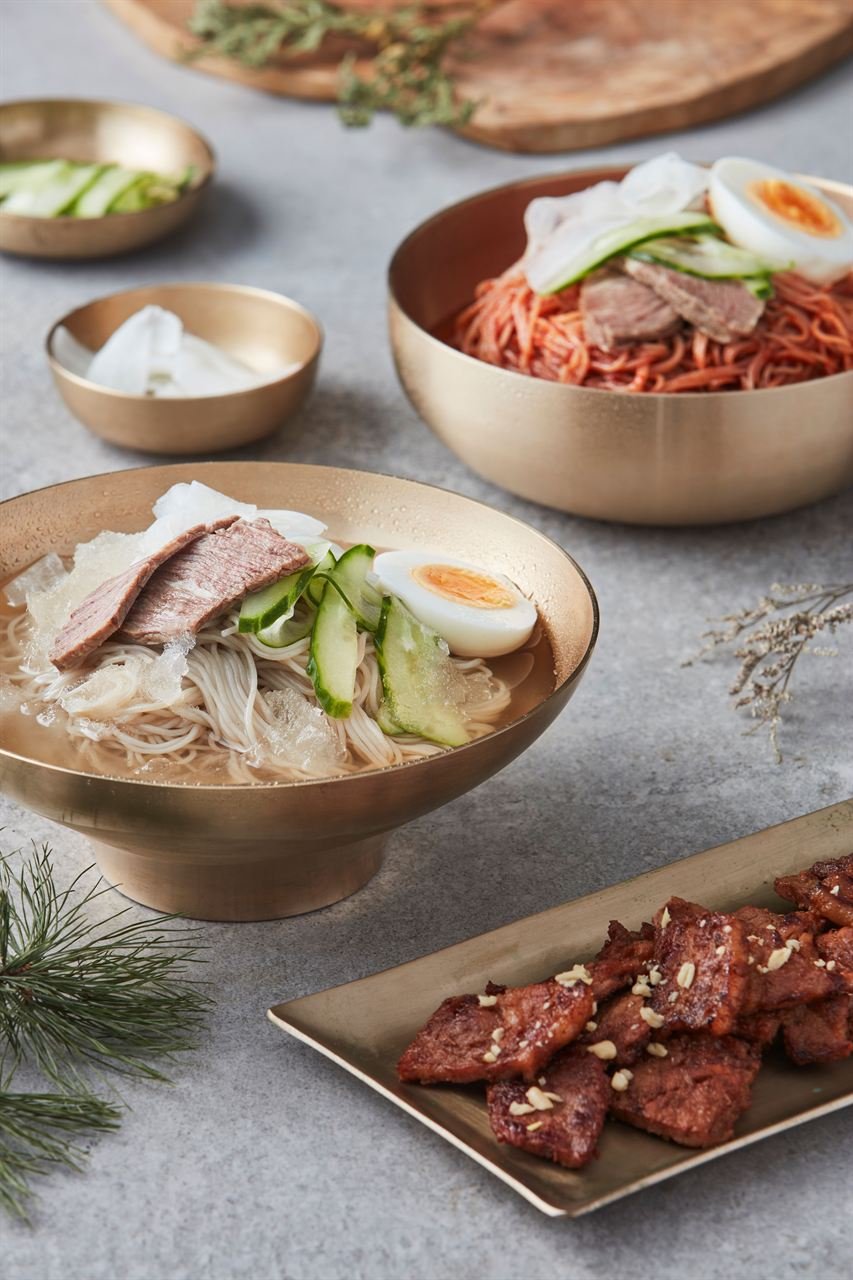
| Dish | Official English name | Why people order it |
|---|---|---|
| 된장찌개 Doenjang-jjigae | Soybean Paste Stew | A warm, salty stew to eat with rice after the meat |
| 계란찜 Gyeran-jjim | Steamed Eggs | Soft and mild, good with spicy food and for kids |
| 물냉면 Mul-naengmyeon | Cold Buckwheat Noodles | Icy, tangy broth that cuts the fat of the pork |
| 비빔냉면 Bibim-naengmyeon | Spicy Buckwheat Noodles | Cold noodles in a spicy sauce |
| 김치볶음밥 Kimchi-bokkeum-bap | Kimchi Fried Rice | At some places, staff fry rice on your grill at the end |
| 공기밥 Gongi-bap | (a bowl of white rice) | Usually ordered separately, not included with the meat |
Table etiquette in 5 rules
These come from VisitSeoul, the Seoul Tourism Organization's official guide:
- Let the eldest person start eating first.
- Give and receive with both hands, including drinks and plates.
- Don't stand your chopsticks or spoon upright in your rice.
- Eat rice with a spoon, not chopsticks.
- No tipping. VisitSeoul says tipping is not customary in Korea.
When someone pours you a drink, hold your glass with both hands. Many people also pour for others instead of for themselves.
Common mistakes
- Ordering one serving for two people. Many places won't accept it. Start with two or three servings and add more later.
- Not checking the grams. A low price may be for a small serving.
- Burning marinated galbi. Turn it often and keep the heat medium.
- Eating pork that's still pink. Pork belly should be cooked all the way through.
- Trying to tip or leaving cash on the table. It isn't expected.
- Wearing your best jacket. The smoke sticks to clothes. Many restaurants have plastic bags or covers for coats. Ask if you don't see them.
Plan your food trip
For more meals that don't need a reservation, see our Gwangjang Market food guide and our list of Michelin Bib Gourmand restaurants in Seoul. Late at night, a convenience store is the cheapest option: read our Korean ramyeon guide. To find grill restaurants near your hotel, use the tips in Naver Map vs Google Maps. If you get stuck ordering, the free 1330 Korea Travel Hotline can interpret by phone.
FAQ
How much is Korean BBQ per person in Seoul?
For pork belly, plan on about 35,000-45,000 won per person including cold noodles or rice, before drinks. That's based on the Seoul average of 18,154 won per serving in September 2026. Beef costs much more.
Can I eat Korean BBQ alone?
Sometimes. Many grill restaurants only take orders of two servings or more. Look for restaurants that say 1인분 주문 가능 ("one serving available") or 혼밥 (eating alone) on the menu or door, or ask before you sit down.
What is the difference between samgyeopsal and galbi?
Samgyeopsal is pork belly, usually grilled plain. Galbi is ribs, beef or pork, and is usually marinated in a sweet soy sauce. Galbi generally costs more.
Do I have to grill the meat myself?
Not always. At some restaurants, staff grill and cut the meat at your table, especially beef. At others, you do it yourself. If you're not sure, just wait a minute. If no one comes, start grilling.
Are side dishes free?
The basic side dishes (lettuce, kimchi, garlic, ssamjang and banchan) come with the meat, and many places refill them for free. Rice, stew, noodles and drinks are usually extra. Check the menu.
Is Korean BBQ cheaper outside Seoul?
In the September 2026 survey, a serving of samgyeopsal averaged 11,500 won in Busan versus 18,154 won in Seoul. Servings differ in size, though, so compare the grams.
Final word
For your first Korean BBQ: order samgyeopsal for two (about 36,000 won in Seoul), check the grams on the menu, wrap it in lettuce with ssamjang, and finish with cold noodles or soybean paste stew. Pay at the counter on your way out, and don't tip.