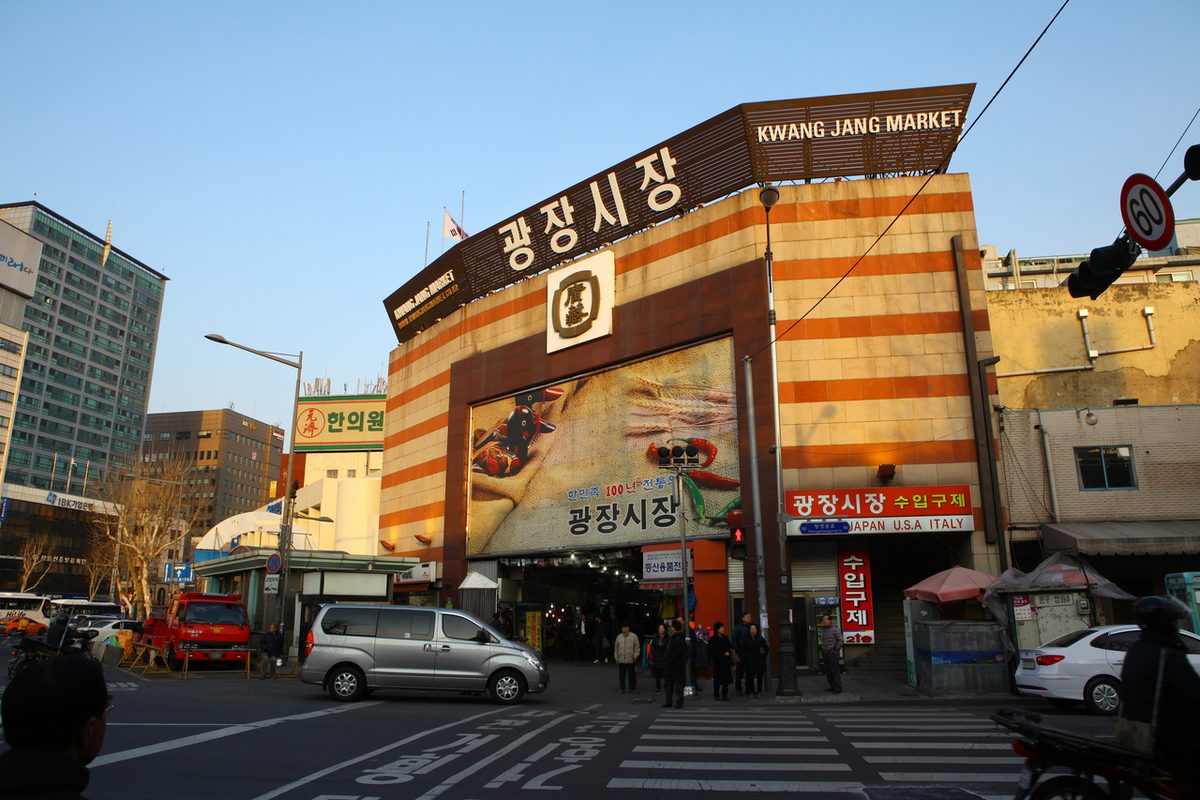
Gwangjang Market is Seoul's best-known place to eat Korean street food sitting shoulder to shoulder with locals. The short answer: go to the food alley in the middle of the market, open 09:00-23:00 every day of the year, get off at Jongno 5-ga Station (Line 1), Exit 8, and start with a bindaetteok (mung bean pancake) and a plate of mayak gimbap. The fabric and clothing shops around it close at 18:00 and on Sundays, so on a Sunday you can still eat, but not shop. Details below are from the Korea Tourism Organization and VisitSeoul, checked on November 5, 2026.
Gwangjang Market at a glance
| What | Details (as of November 5, 2026) |
|---|---|
| Address | 88 Changgyeonggung-ro, Jongno-gu, Seoul |
| Nearest station | Line 1 Jongno 5-ga Station, Exit 8 (about 62 m) |
| Food alley hours | 09:00-23:00, open all year |
| Rest of the market | 09:00-18:00, closed on Sundays |
| Guie shopping street | 10:00-19:00, closed on Sundays |
| Size | About 5,000 stores |
| Phone | +82-2-2267-0291 (or the 1330 Travel Hotline) |
| Parking | Jongno 4-ga Jongmyo Parking Lot |
| Admission | Free (you pay only for what you eat) |
The Korea Tourism Organization (KTO) describes Gwangjang as the first permanent market in Korea, and VisitSeoul says it opened in the early 20th century. Its name means "to gather from afar and keep altogether." Today it's a large wholesale market for silk, fabric, clothing, bedding, food and handicrafts, and the food street is the part most visitors come for. KTO says the food street connects to the East Gate, North Gate 2 and South Gate 1.
The 6 foods to try
These are the dishes VisitSeoul and KTO highlight for the market. We describe what each dish is and how it's eaten, not how a particular stall tastes.
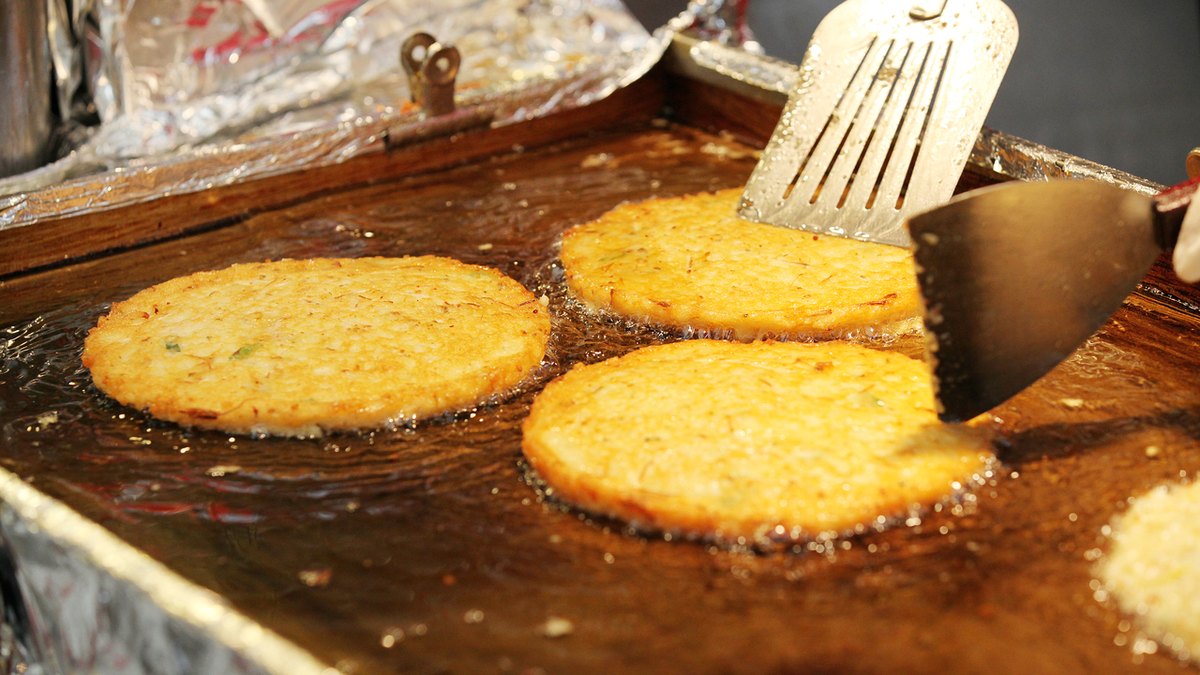
1. Bindaetteok (빈대떡, mung bean pancake)
Ground mung beans mixed with vegetables and sometimes pork, fried flat until crispy on the outside. VisitSeoul calls it nokdujeon, which is the same thing. You'll see stacks of them by the griddles. One pancake is big enough for two people as a starter. It's usually served with a soy and onion dipping sauce.
2. Mayak gimbap (마약김밥, "addictive" gimbap)
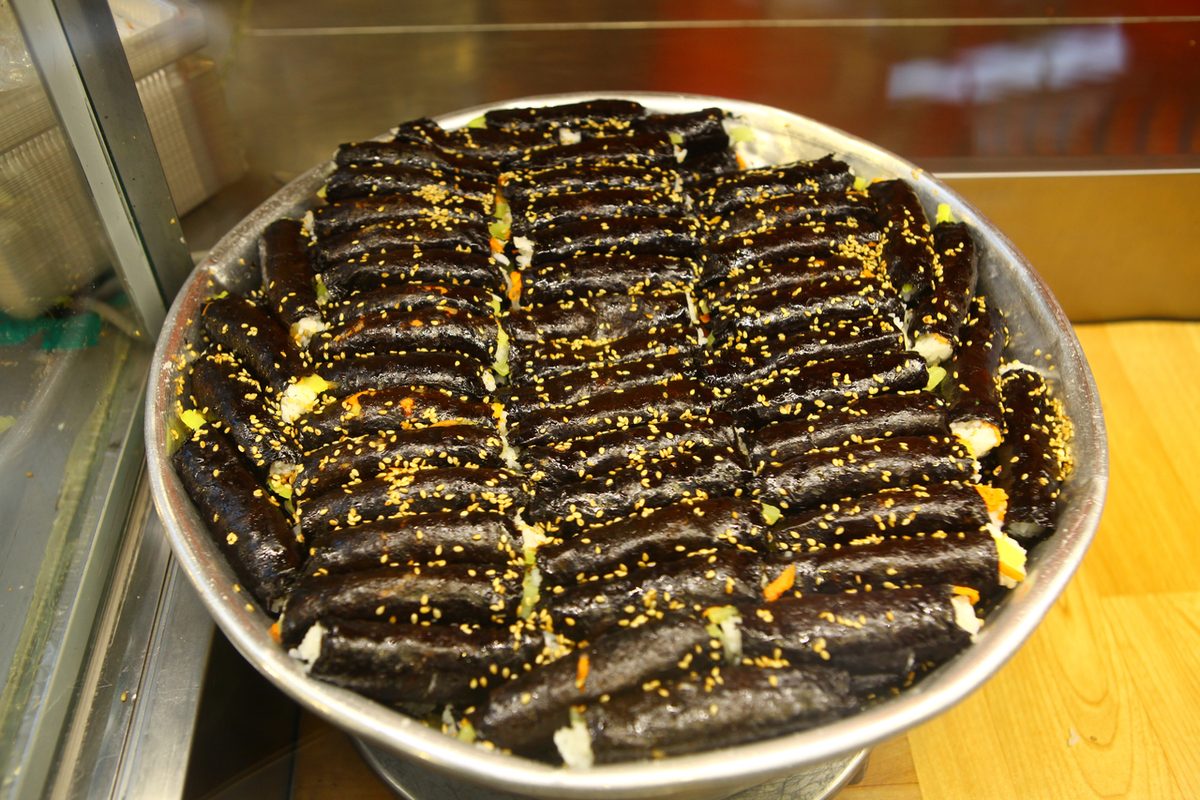
Small, finger-sized rolls of rice and vegetables in seaweed, served with a mustard-soy dipping sauce. "Mayak" means "drug" in Korean, a joke about how hard it is to stop eating them. VisitSeoul lists Mother and Daughter's Gimbap in the market as the place known for the original. A plate is an easy snack to share while you walk around.
3. Yukhoe (육회, seasoned raw beef)
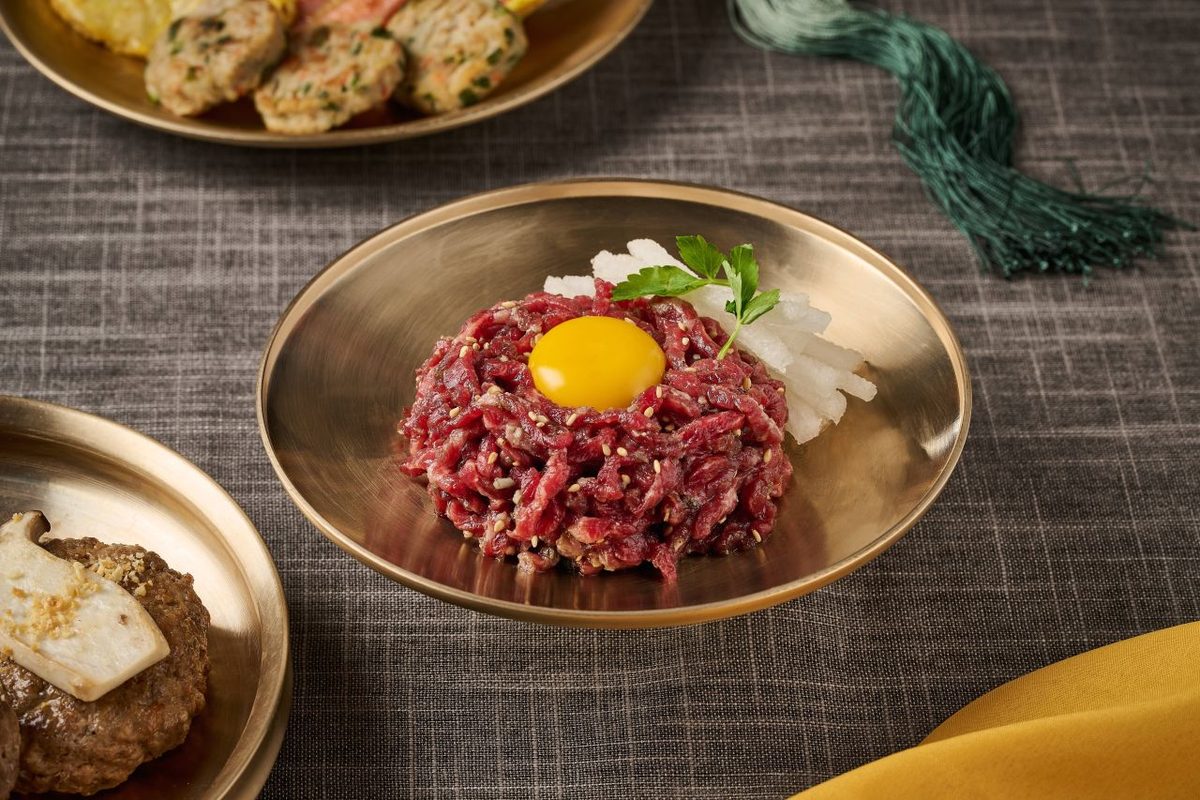
Thin strips of raw beef seasoned with sesame oil and pear, often topped with an egg yolk. VisitSeoul lists Hyeongje Yukhoe near the market for it, and there's a cluster of yukhoe restaurants nearby. It's raw meat, so skip it if you're pregnant, have a weak stomach, or are unsure about raw food.
4. Tteokbokki (떡볶이, spicy rice cakes)
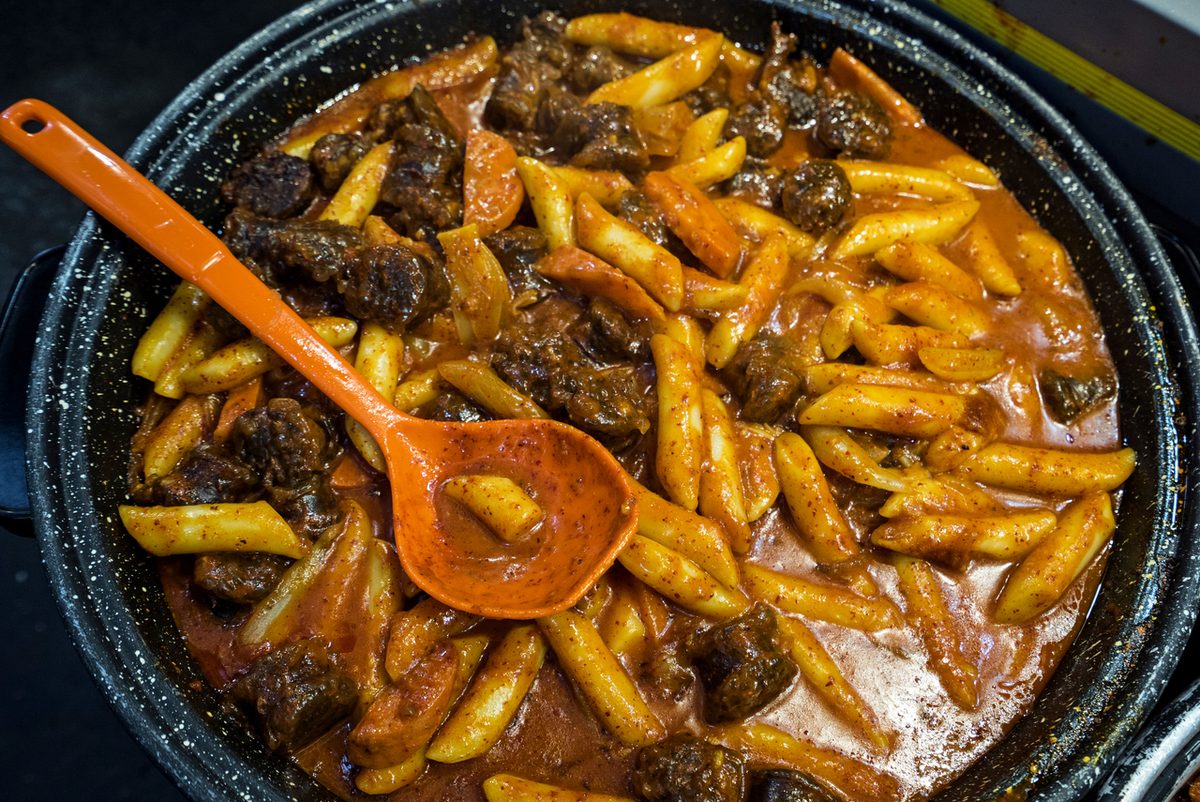
Chewy rice cakes in a sweet, spicy red sauce. It can be hot for people who don't eat chili often. Ask for a small portion first if the stall offers one.
5. Eomuk (어묵, fish cake)
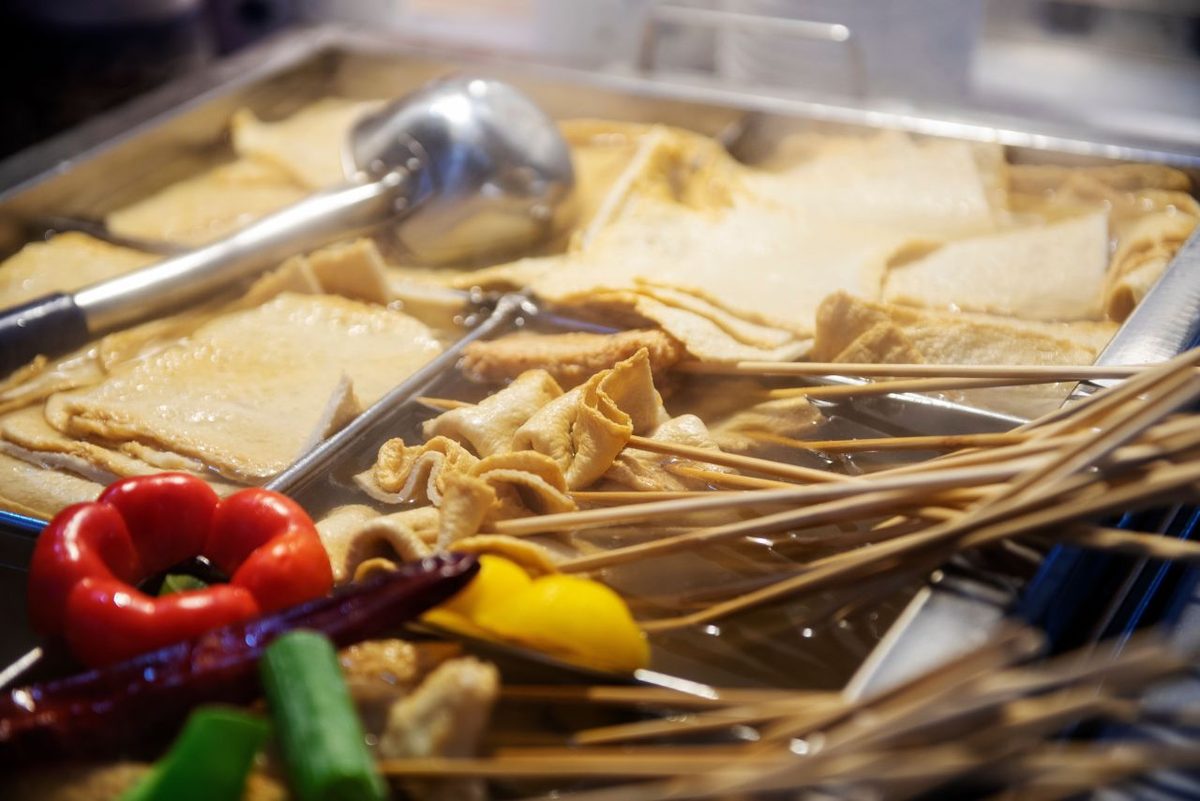
Fish cake on skewers in a warm broth. It's mild, cheap and good on a cold day, and a nice break if the tteokbokki is too spicy.
6. Jeotgal and banchan to take home (젓갈·반찬)
The market also sells side dishes and salted seafood. VisitSeoul lists Soonhee Food for salted fish and crab. Ask the seller to pack it for travel. Check your airline's and your home country's rules before you fly with food.
How to order without speaking Korean
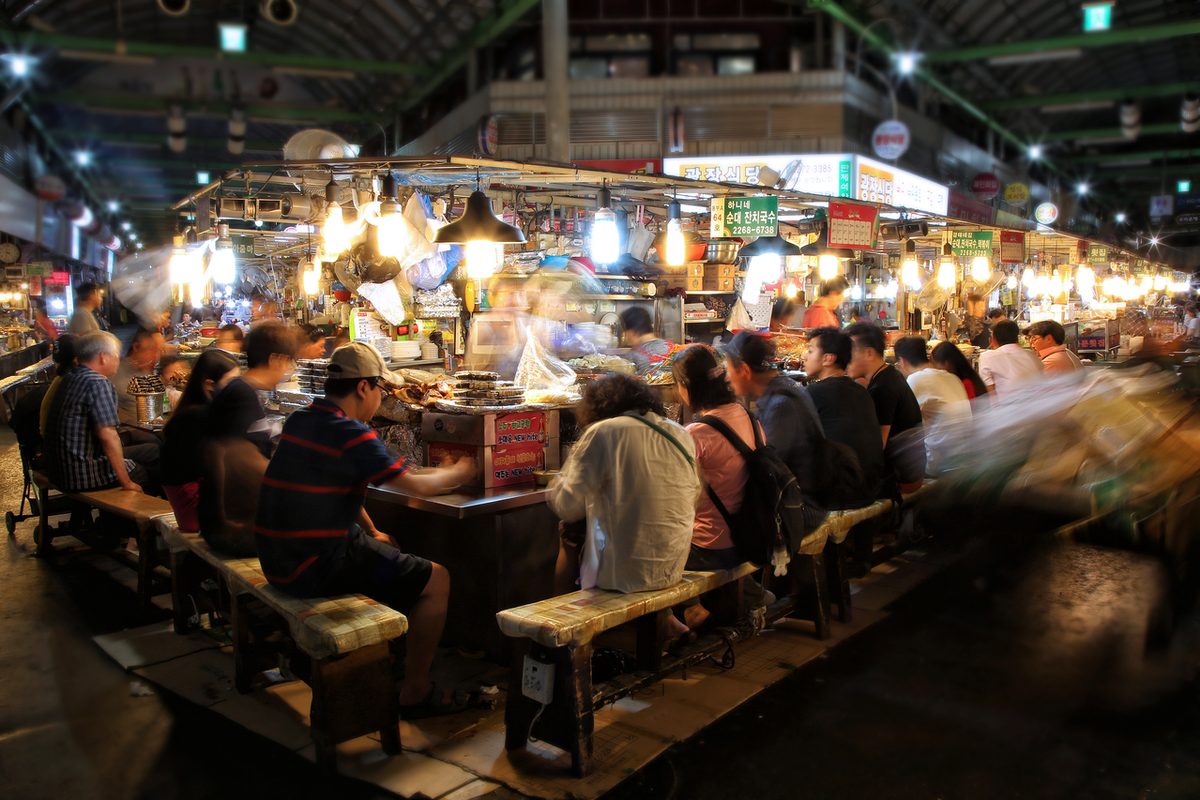
- Walk the whole alley first. Many stalls sell similar food. Look at what's on the counter and which seats are free.
- Read the menu board and its prices before you sit down. Official pages don't list prices, and prices change, so the board is your source of truth.
- Point and hold up fingers. Pointing at the food and showing "1" or "2" with your fingers works everywhere. Useful words: ige juseyo ("this one, please"), eolmayeyo? ("how much is it?").
- Sit where you're shown. Seating is on benches around the stall counters. Space is tight, so keep your bag in front of you.
- Pay when you finish (or when you order, if asked). Have some cash ready, because card acceptance varies from stall to stall.
A simple plan for one visit
| Time | What to do | Why |
|---|---|---|
| 11:00-12:00 | Arrive at Exit 8, walk the food alley, share a bindaetteok and mayak gimbap | Fewer people than in the evening, and the fabric shops are open too (Mon-Sat) |
| 12:00-12:30 | Yukhoe or tteokbokki, then eomuk | Try one main dish and one mild dish |
| 12:30-13:00 | Look at the 2nd-floor hanbok and vintage clothing shops (Mon-Sat) | VisitSeoul recommends them |
| Afternoon | Walk to Jongmyo Shrine or Sewoon Shopping Center, or take the subway to Dongdaemun Design Plaza | VisitSeoul lists these as nearby sights |
If you prefer the busy, lit-up atmosphere, come in the evening instead. The food alley stays open until 23:00, but the fabric and clothing shops are closed by then.
Common mistakes
- Coming on Sunday to shop. The food alley is open, but most of the rest of the market is closed on Sundays.
- Sitting down before checking the price. Always look at the board first.
- Ordering too much at the first stall. Portions are bigger than they look. Share, then move on.
- Only bringing a credit card. Keep some cash for small stalls.
- Using the wrong exit. Exit 8 of Jongno 5-ga Station is the closest according to VisitSeoul.
Plan it with the rest of your trip
Gwangjang is close to Jongmyo and a short ride from the palaces. Combine it with our Gyeongbokgung Palace guide and our free things to do in Seoul. For a sit-down meal at a chef's restaurant, see our Culinary Class Wars restaurants guide. To find stalls and exits, use the tips in Naver Map vs Google Maps.
FAQ
Is Gwangjang Market open on Sundays?
The food alley is open every day of the year, 09:00-23:00. Most of the other shops (fabric, clothing, goods) are closed on Sundays, according to KTO and VisitSeoul.
What time should I go?
Late morning on a weekday is calmer, and the clothing and fabric shops are also open. Evenings are busier and more lively. Food alley hours are 09:00-23:00.
How much should I budget?
Official sources don't publish prices, and they change. Check each stall's board. Most visitors share a few dishes, so plan for several small plates rather than one big meal.
Is the food safe for visitors?
Cooked dishes like bindaetteok, tteokbokki and eomuk are served hot. Yukhoe is raw beef, so decide based on your own health. If you have allergies, show a written note in Korean.
How do I get there from Myeongdong?
Take the subway to Jongno 5-ga Station (Line 1) and leave by Exit 8. Check your route and time on Naver Map before you go.
Final word
For your first visit, keep it simple: Line 1 to Jongno 5-ga, Exit 8, the food alley (09:00-23:00, open every day), then share a bindaetteok and mayak gimbap. Check the menu board before you sit down, and come Monday to Saturday if you also want to see the fabric and hanbok shops.